TorontoOntario · 36 tours
 Niagara FallsOntario · 25 tours
 New York CityNew York · 30 tours
 Las VegasNevada · 8 tours
 San FranciscoCalifornia · 16 tours
 VancouverBritish Columbia · 17 tours
 DubaiUAE · 54 tours
 Abu DhabiUAE · 5 tours
 Buenos AiresArgentina · 23 tours
 AthensGreece · 31 tours
 AucklandNew Zealand · 38 tours
 CancunMexico · 54 tours
No destinations match “”. Try searching all tours instead — that search understands full questions, not just place names.
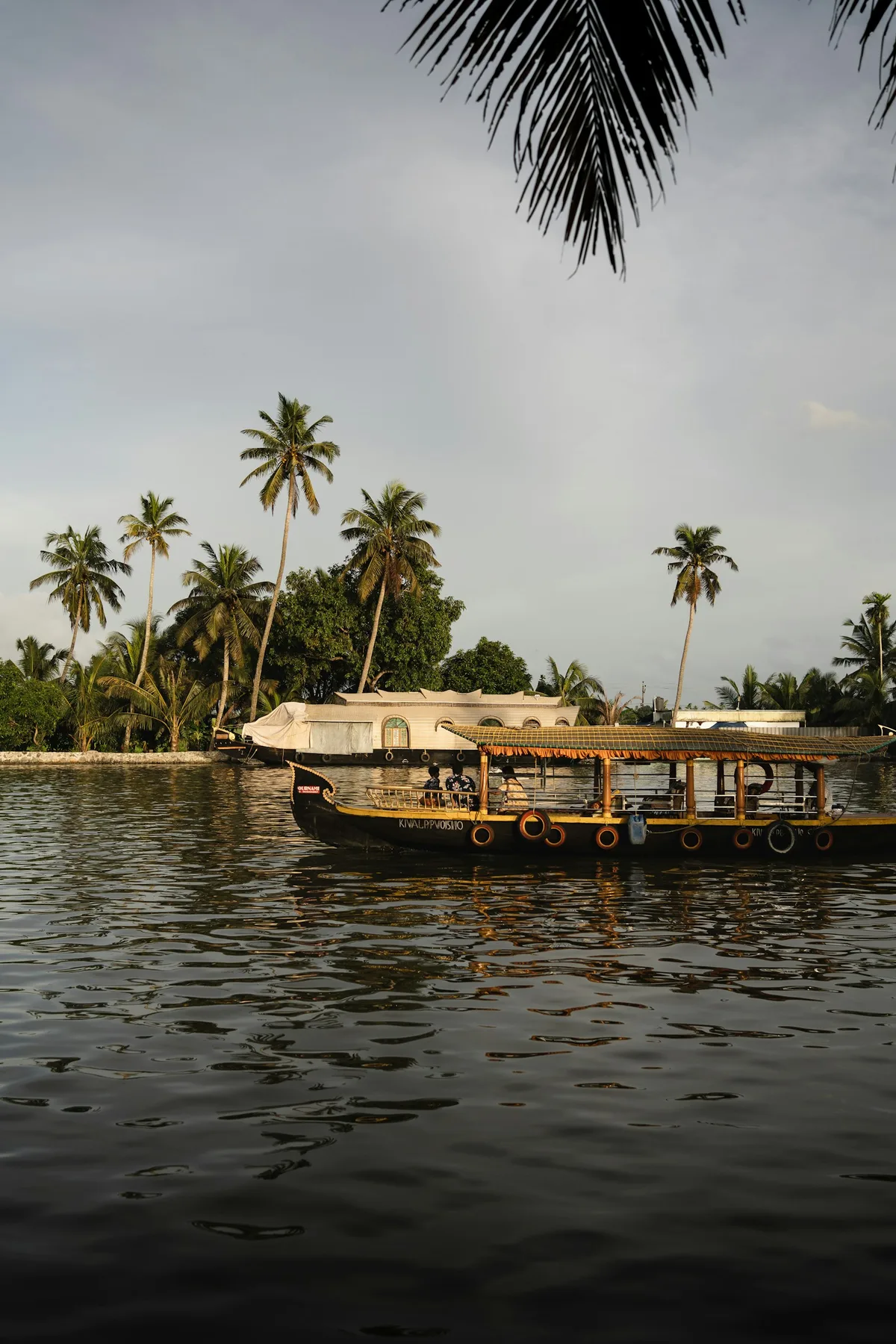
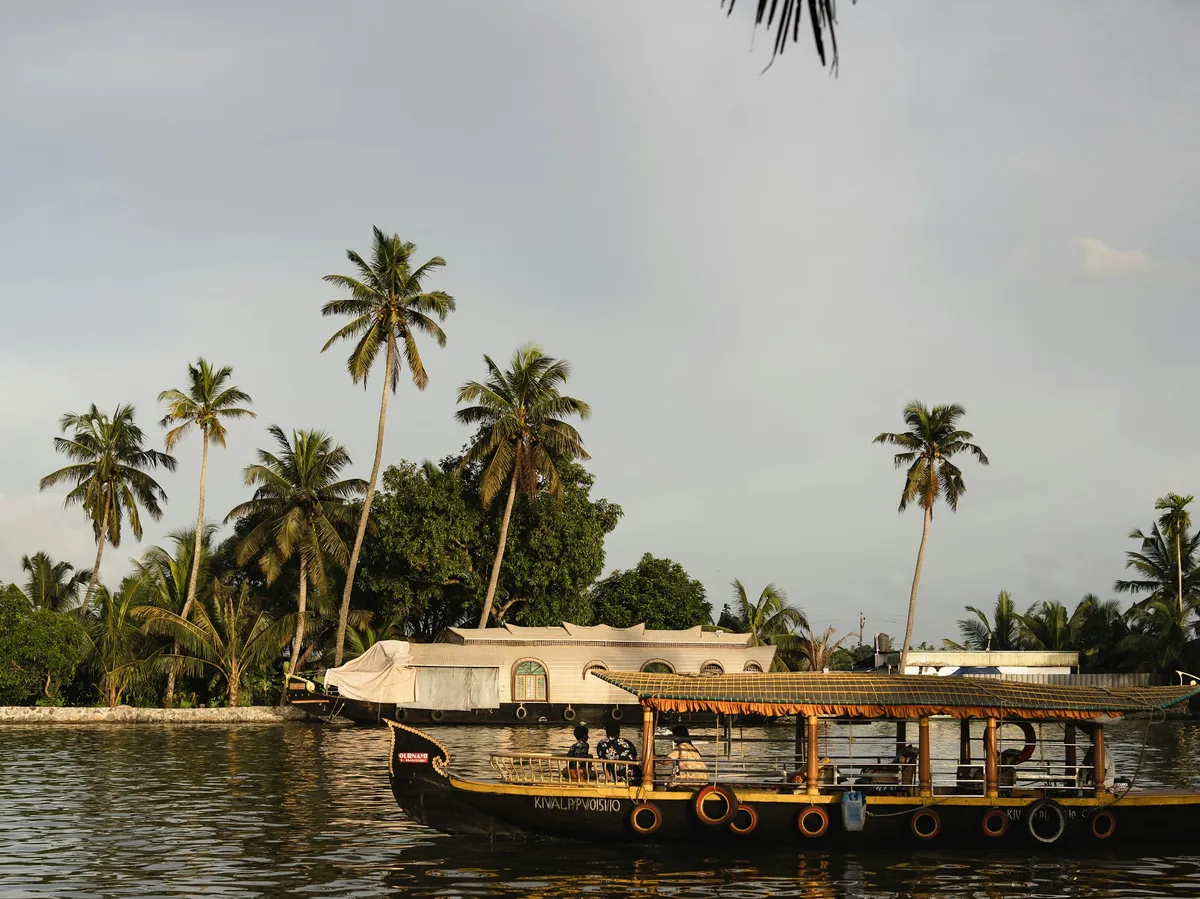
A network of lagoons, canals, and rivers backing onto coconut palms and paddy fields, traditionally explored aboard a converted rice-barge houseboat.
Visitor guide
The Kerala backwaters are a network of brackish lagoons, canals, lakes and rivers running parallel to the Arabian Sea along the Malabar Coast of Kerala, India. Alleppey, officially Alappuzha, sits at the heart of the system and is a main starting point for houseboat cruises on Vembanad Lake and the canals of the Kuttanad region.
Wikipedia describes the backwaters as a system of more than 900 kilometres of waterways, including five large lakes linked by canals, fed by 38 rivers and stretching along nearly half the length of Kerala. They were formed when waves and shore currents built low barrier islands across the mouths of rivers flowing down from the Western Ghats. Vembanad Lake, with an area of about 2,033 square kilometres, is the largest lake in Kerala and the longest backwater. National Waterway 3 runs for 205 kilometres from Kollam to Kottappuram. Three of the system's wetlands, Ashtamudi Lake, Sasthamkotta Lake and the Vembanad-Kol wetlands, are listed under the Ramsar Convention as wetlands of international importance.
The ecology is shaped by the meeting of fresh and salt water. A barrage near Thanneermukkom keeps saltwater from reaching deep inland so that freshwater can be used for irrigation. Crabs, frogs, mudskippers, kingfishers, darters, cormorants, otters and turtles live in and along the water, and coconut palms and pandanus shrubs line the banks.
The Kuttanad region, which spans Alappuzha and Kottayam districts, is described by Wikipedia as the lowest-lying part of India and one of the few places in the world where farming is carried out about 1.2 to 3 metres below sea level. Four major rivers, the Pamba, Meenachil, Achankovil and Manimala, flow into it. The Food and Agriculture Organization of the United Nations designated the below-sea-level farming system as a Globally Important Agricultural Heritage System in 2013. Rice paddies, coconut groves and small villages line canals, and daily life still revolves around boats, fishing and the coir industry.
Alappuzha lies on the Laccadive Sea about 62 kilometres south of Kochi. Wikipedia says it flourished in the 16th and 17th centuries as a hub of the spice trade with Dutch and Portuguese traders, and that canals laid through the town under Raja Kesavadas helped it develop. Today it is known for its waterways and for its coir industry, and travel writers often call it the Venice of the East.
The kettuvallam, or Kerala houseboat, was traditionally a grain barge that carried rice harvested from the fields beside the backwaters. These boats had thatched roofs over wooden hulls up to about 30 metres long. Converted for travellers, they have become floating cottages with bedrooms, dining areas and decks, with meals cooked on board. Wikipedia says more than 2,000 ply the waterways and that the government classifies tourist houseboats as platinum, gold or silver. It also notes that unregulated growth of motorised houseboats has raised concerns about diesel pollution in the fragile ecosystem.
Snake boats, called chundan vallams, are long narrow boats over 30 metres in length with a raised prow resembling a cobra hood, once used to carry soldiers and now used in races. Each carries about a hundred rowers. The Nehru Trophy Boat Race on Punnamada Lake near Alleppey is described as the most prestigious, and races are held mostly in the Kuttanad region.
Public ferries also connect villages across the waters, and quieter canals can be explored in smaller boats. A private tour with a driver and guide can combine the backwater cruise with Kochi, Munnar or Kumarakom, and the schedule is arranged around the weather and the water.
See every tour and attraction we cover in India.