TorontoOntario · 36 tours
 Niagara FallsOntario · 25 tours
 New York CityNew York · 30 tours
 Las VegasNevada · 8 tours
 San FranciscoCalifornia · 16 tours
 VancouverBritish Columbia · 17 tours
 DubaiUAE · 54 tours
 Abu DhabiUAE · 5 tours
 Buenos AiresArgentina · 23 tours
 AthensGreece · 31 tours
 AucklandNew Zealand · 38 tours
 CancunMexico · 54 tours
No destinations match “”. Try searching all tours instead — that search understands full questions, not just place names.
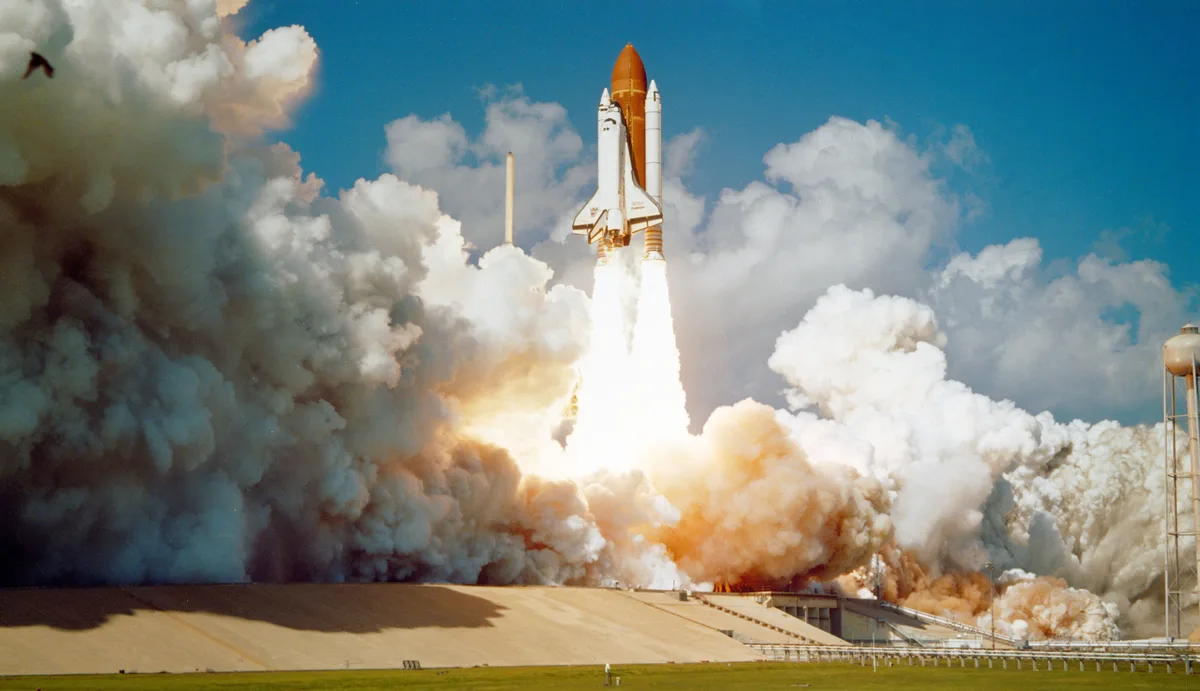
NASA's launch site on Florida's Space Coast, about an hour from Orlando, with rocket garden exhibits, the Space Shuttle Atlantis on display, and real launch pads visible from the visitor complex.
Visitor guide
The Kennedy Space Center Visitor Complex is the public face of NASA's Kennedy Space Center in Florida, the agency's main launch site. It is where visitors can stand beneath a real Space Shuttle orbiter, walk among retired rockets and board a bus that goes behind the gates of the working spaceport. It is run by a private operator under agreement with NASA, so the visitor side and the launch side are distinct worlds.
NASA activated its Launch Operations Center in Florida on July 1, 1962, and it was renamed the John F. Kennedy Space Center in 1963. Public interest arrived almost at once. In 1963 NASA Administrator James Webb set up self-guided drive-through tours of Cape Canaveral Air Force Station, with simple displays in a small trailer, and about 100,000 people came that first year. A full visitor center, later known as Spaceport USA, opened to the public on August 1, 1967; the visitor complex's history says about 475,000 guests had toured KSC and the Cape within a year of the July 1966 start of the bus tour. Delaware North was chosen to operate the complex in 1995, and the site took on its present name during the changes of the following years.
The headline attraction is Space Shuttle Atlantis, which opened to the public on June 29, 2013 in a purpose-built building that the operator describes as about 90,000 square feet. The orbiter is displayed tilted at about 43 degrees with its payload bay doors open, as if still in flight. Atlantis flew 33 missions, from its first launch on October 3, 1985 to the final shuttle flight, STS-135, in July 2011. The building also holds a life-size Hubble Space Telescope replica and a "Forever Remembered" area honoring the 14 astronauts lost in the Challenger and Columbia accidents.
The Rocket Garden is an open-air display of historic rockets and capsules, including a Saturn IB (SA-209) restored in 2018 and a Delta II added in 2021. Heroes & Legends, which opened in 2016, houses the U.S. Astronaut Hall of Fame along with artifacts such as the Gemini 9A capsule and Wally Schirra's Sigma 7 Mercury capsule. The Shuttle Launch Experience, opened in 2007, uses motion simulators to recreate the feel of a shuttle launch.
The bus tour, which the operator describes as going behind NASA's gates to see the past, present and future of the spaceport, runs to the Apollo/Saturn V Center. That building opened in January 1997, according to the visitor complex's history, and houses a restored Saturn V rocket along with the Apollo 14 command module Kitty Hawk. It sits about six miles north of the main complex and is reached by the tour bus. According to Wikipedia, the tour has also added a stop at The Gantry, a four-story observation tower at Launch Complex 39, since summer 2025; confirm current stops with the operator.
Kennedy itself is a working multi-user spaceport. NASA lists Launch Complex 39A, used for SpaceX Falcon 9 launches, and Launch Complex 39B, which hosted the Space Launch System rocket with Orion, among its facilities. Launch viewing from the visitor complex is offered on some launch days, so ask the operator what is scheduled.
Attendance has been strong for decades: the complex recorded about 1.7 million visitors in 2016. Exhibits, bus-tour routes and launch-viewing arrangements change as missions and construction schedules change, so check the visitor complex directly for current hours, tickets and what is open on your day. Admission and any launch-viewing packages are arranged with the operator.
A private tour fits this site well, because the complex is large and a day here is mostly about timing. With your own vehicle and a driver collecting you door to door, you can arrive when you choose and leave when you are done, with no parking or transfer logistics to manage. Admission is booked separately with the visitor complex.
See every tour and attraction we cover in Orlando.