TorontoOntario · 36 tours
 Niagara FallsOntario · 25 tours
 New York CityNew York · 30 tours
 Las VegasNevada · 8 tours
 San FranciscoCalifornia · 16 tours
 VancouverBritish Columbia · 17 tours
 DubaiUAE · 54 tours
 Abu DhabiUAE · 5 tours
 Buenos AiresArgentina · 23 tours
 AthensGreece · 31 tours
 AucklandNew Zealand · 38 tours
 CancunMexico · 54 tours
No destinations match “”. Try searching all tours instead — that search understands full questions, not just place names.
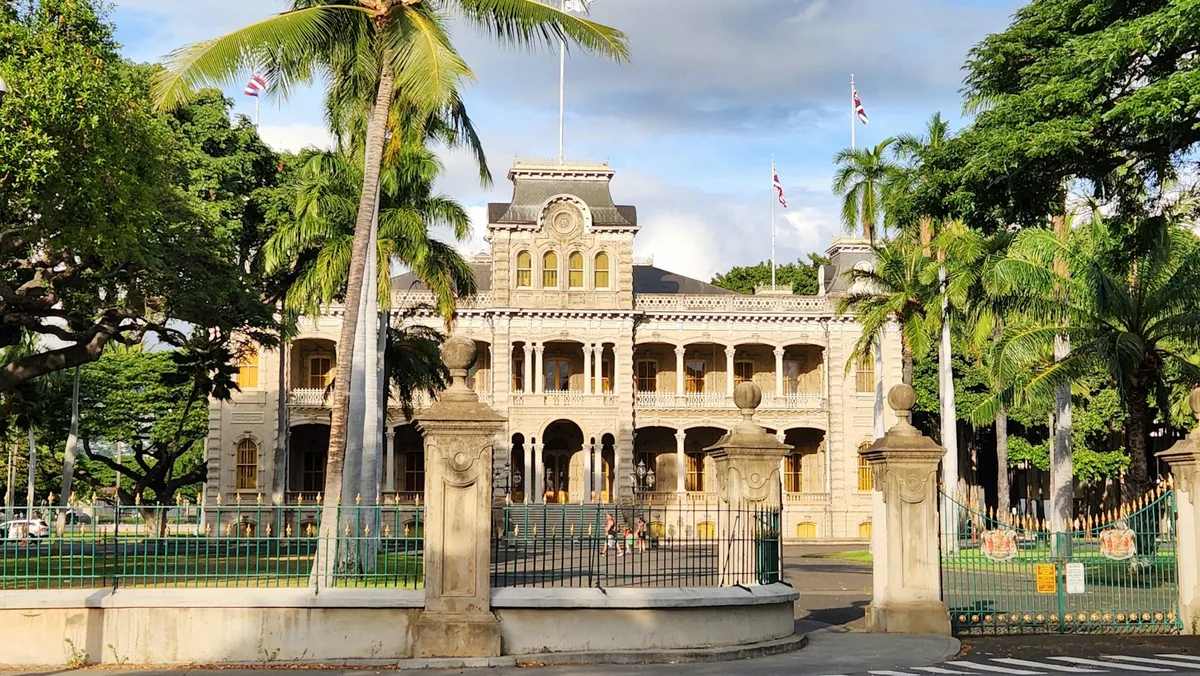
The only official royal residence in the United States, a National Historic Landmark in downtown Honolulu since 1962.
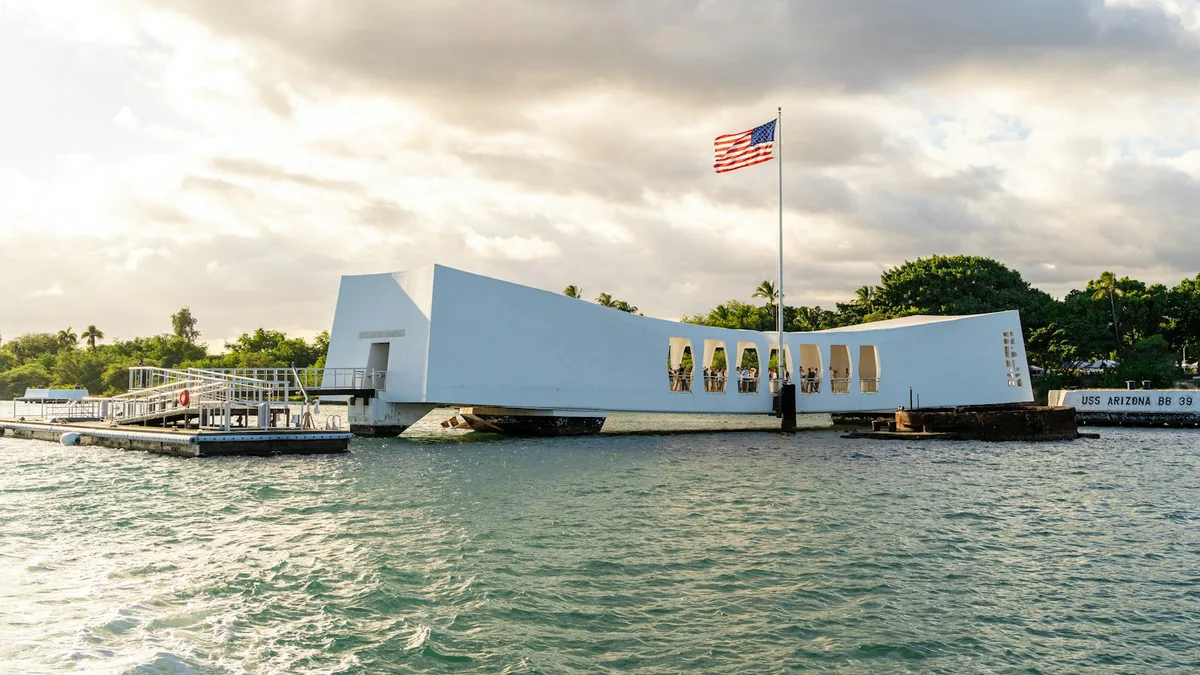 Private Tours
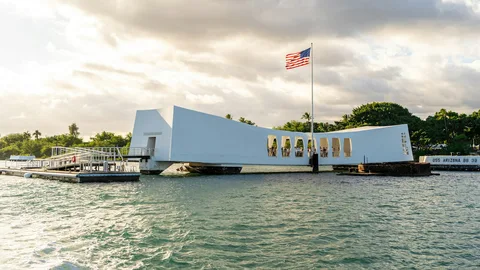
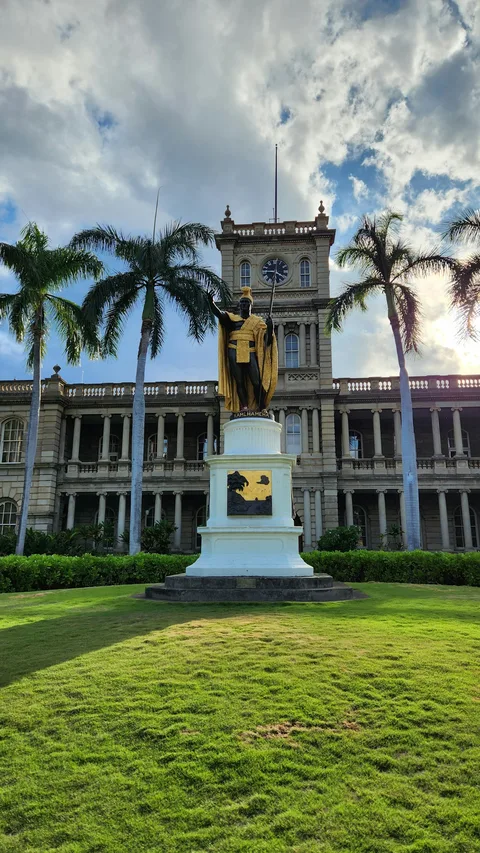
A private tour combining skip-the-line access to the USS Arizona Memorial at Pearl Harbor with downtown Honolulu's Iolani Palace, the Hawaii State Capitol, and the King Kamehameha Statue.
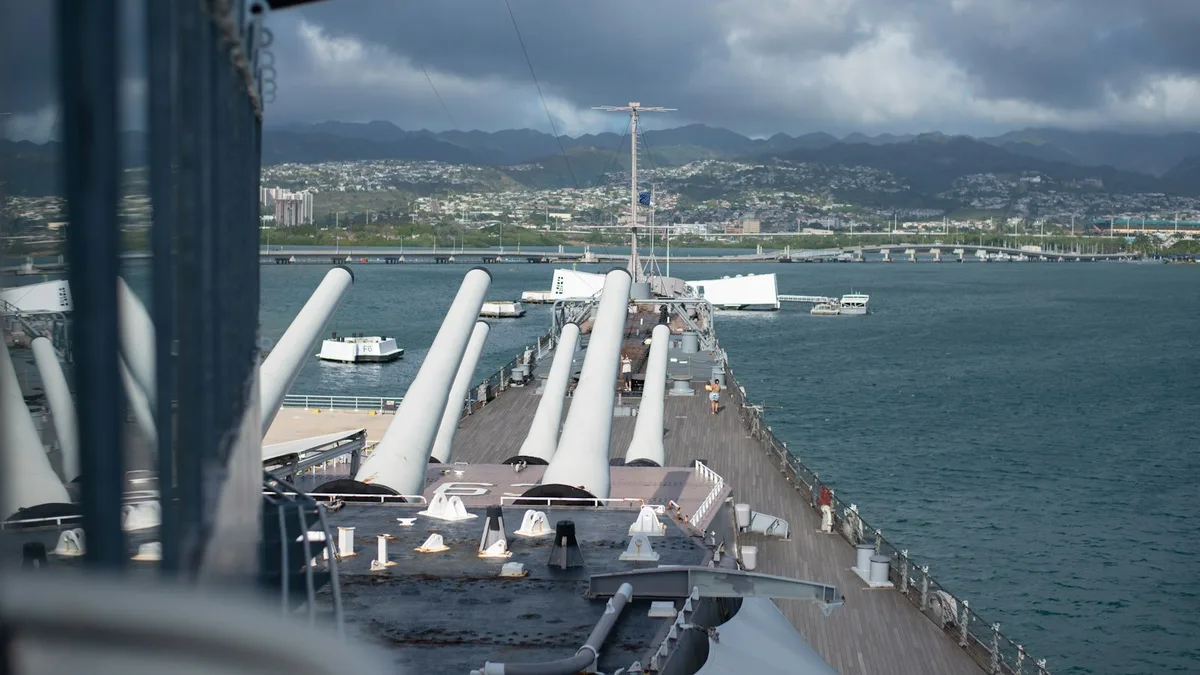 Private Tours
A private, in-depth Pearl Harbor tour visiting both the USS Arizona Memorial and the Battleship USS Missouri Memorial on Ford Island, plus downtown Honolulu's King Kamehameha Statue and Iolani Palace.
Visitor guide
ʻIolani Palace in downtown Honolulu was the residence of Hawaiʻi's last reigning monarchs and is described by the museum as the only official royal residence in the United States. It was built under King Kalākaua and completed in 1882, and it is a National Historic Landmark. Today it is a house museum run by a nonprofit.
The site had earlier palaces. Kamehameha III established his official residence there in 1845, and that older Hale Aliʻi served five Hawaiian kings until it was demolished in 1874. Kalākaua's new palace had its cornerstone laid on December 31, 1879, and was finished in November 1882, at a reported cost of over $340,000. Wikipedia credits architect Thomas J. Baker with the design, with contributions from Charles J. Wall and Isaac Moore. The building is brick with a concrete facing, described as American Florentine style, with two storeys over a raised basement, four corner towers and two central towers rising to about 76 feet. The grounds cover 10.6 acres.
Kalākaua had been reigning for nine years when a formal coronation was held on February 12, 1883. The coronation pavilion, Keliʻiponi Hale, was afterward moved to a corner of the grounds and became a bandstand.
Kalākaua saw electric lighting on his travels and had the palace lit with it. The palace's own release says the grounds were lit for his 50th birthday in November 1886 and that by June 1887 the palace had 325 incandescent lights, including 72 on six chandeliers in the Throne Room. In 2018 the IEEE gave the palace a Milestone for the electric lighting of the Kingdom.
After the Committee of Safety overthrew the monarchy in 1893, troops of the Provisional Government took the palace, and it was later called the Executive Building. After the failed 1895 uprising, Queen Liliʻuokalani was held for nearly eight months in a small upstairs room, now called the Imprisonment Room, and her trial took place in the former Throne Room. On August 12, 1898, the American flag was raised over the palace to mark annexation. The palace later served as the territorial and then state capitol, and was also used for military headquarters during World War II. Government offices left in 1969, and following restoration the palace opened as a museum in 1978. Liliʻuokalani's state funeral was held in the Throne Room in 1917.
The museum lists the first floor as the Grand Hall, State Dining Room, Blue Room and Throne Room, and the second floor as the King's and Queen's suites, Music Room and Imprisonment Room. The Throne Room displays a reproduction of Kalākaua's coronation suit. On the grounds are the Coronation Pavilion, the Sacred Mound, and ʻIolani Barracks, which houses the ticket office. The museum offers docent-led and self-led audio tours and special themed tours.
Palace hours, tickets and tour types change, so check with the museum and reserve ahead. A private tour with a driver and door-to-door pickup can place the palace alongside other downtown Honolulu stops, with your group choosing how long to spend inside.
See every tour and attraction we cover in Honolulu.