TorontoOntario · 36 tours
 Niagara FallsOntario · 25 tours
 New York CityNew York · 30 tours
 Las VegasNevada · 8 tours
 San FranciscoCalifornia · 16 tours
 VancouverBritish Columbia · 17 tours
 DubaiUAE · 54 tours
 Abu DhabiUAE · 5 tours
 Buenos AiresArgentina · 23 tours
 AthensGreece · 31 tours
 AucklandNew Zealand · 38 tours
 CancunMexico · 54 tours
No destinations match “”. Try searching all tours instead — that search understands full questions, not just place names.
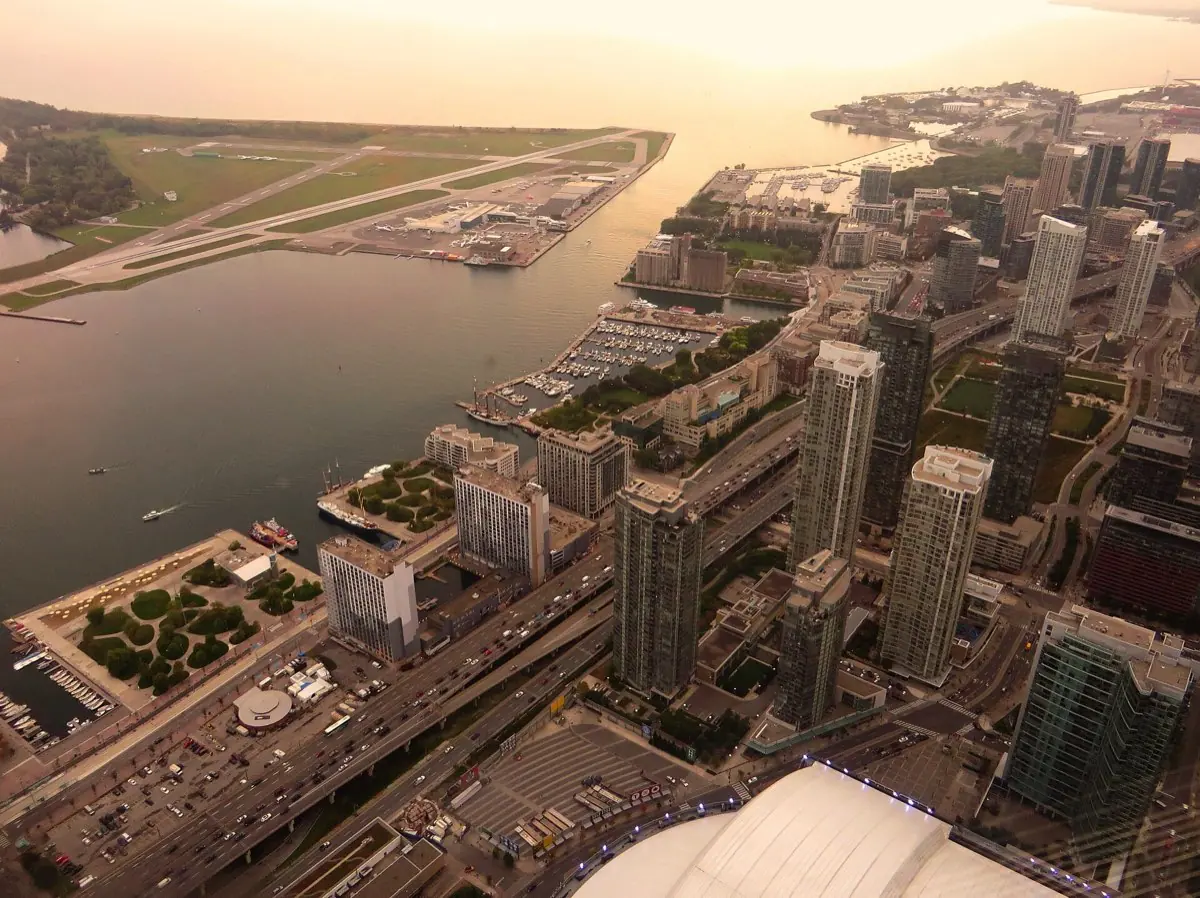
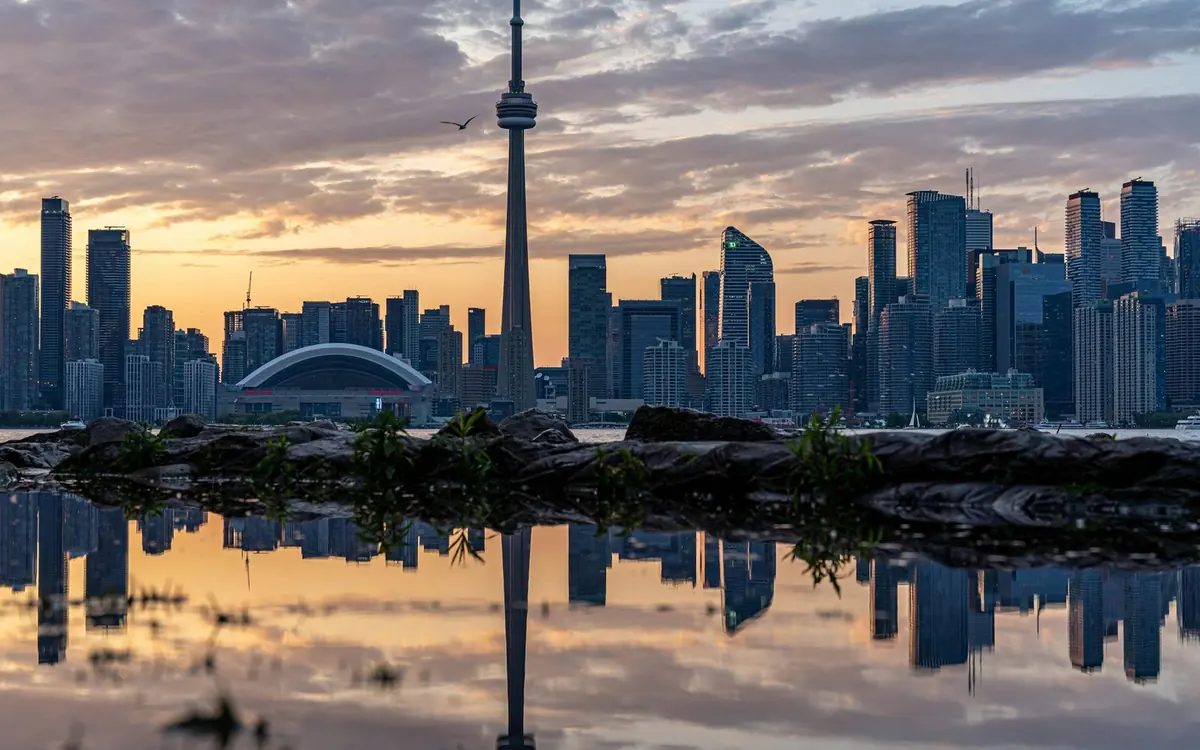
Toronto's waterfront cultural hub, with public art, events, and lake views along Queens Quay.
Visitor guide
Harbourfront Centre is a non-profit cultural organization on Toronto's Lake Ontario shoreline. It runs concerts, festivals, theatre, dance, literary events, craft studios, and public waterfront space on land that was industrial within living memory. Wikipedia reports more than 4,000 events a year, many of them free.
Harbourfront began as a federal Crown corporation in the early 1970s, created to turn a stretch of railway, warehouse, and shipping land into public waterfront. Wikipedia gives 1972 for the start but flags the date as disputed, and Harbourfront's public opening is generally placed in 1974; treat those years as approximate. Wikipedia links the federal motivation partly to Toronto's criticism of federal spending on Montreal projects such as Expo 67 and the 1976 Olympics, and notes that the province's Ontario Place was a parallel effort to revive the harbour. The organization became a non-profit charity on January 1, 1991, and is funded by sponsors, government grants, donors, and its own earned revenue.
Some milestones are documented. The top portion of the CN Tower was displayed at Harbourfront in 1975, with schoolchildren signing it first according to Wikipedia. Early uses included children's summer day camps in 1978 and a Cirque du Soleil performance in 1985. The first WOMAD festival in Canada was held here in 1988, and in 2004 the site hosted the multi-day Planet IndigenUS Festival of contemporary Indigenous cultures.
Queen's Quay Terminal began life as the Toronto Terminal Warehouse, a cold-storage building begun in 1926 and opened in early 1927 with rail access and steamship docks. Wikipedia says it was one of the largest buildings in Canada and the country's first poured-concrete building, though that claim should be treated cautiously. Marine use faded in the 1960s as shipping shifted to container ports elsewhere, and the federal government bought the property in 1973 as part of the Harbourfront redevelopment. Eberhard Zeidler's firm led its conversion into shops, offices and condominiums in the early 1980s (sources give 1982 or 1983), work that won the 1986 Governor General's Medal for Architecture.
The Power Plant gallery occupies the warehouse's former powerhouse, built in 1926 with its companion Ice House, which is now the Harbourfront Centre Theatre. The gallery says the powerhouse operated as a real power plant until 1980. The institution began in 1976 as the Art Gallery at Harbourfront, and after an architect-led renovation by Lett/Smith Architects it opened under its current name on May 1, 1987, with its smokestack retained as a reminder of the building's past.
Harbourfront Centre's grounds include the outdoor Harbourfront Stage, the Harbourfront Centre Theatre, and the Fleck Dance Theatre. The Power Plant, a contemporary art gallery, sits in the converted power station. A craft and design studio hosts artists working in ceramics, glass, metal and textiles. The Toronto Music Garden, designed by cellist Yo-Yo Ma and landscape designer Julie Moir Messervy, is a short walk along the water and was officially opened in 1999. It grew out of a film in Ma's Inspired by Bach series and follows the six dance movements of Bach's first cello suite, with the Prelude as a flowing river, the Allemande as a birch grove, the Courante as wildflower meadow, and the Sarabande as a grove of conifers.
Programming runs through the year: the Authors at Harbourfront Centre series (September to June), the International Festival of Authors (October), summer festivals (May to October), and the World Stage series (February to May). Wikipedia says the organization works with more than 450 community groups and about 2,000 volunteers. Seasonal offerings have included outdoor skating and craft studios; check Harbourfront Centre's official calendar for what is running now, as programming, hours, and ticketing change.
The Jack Layton Ferry Terminal for the Toronto Islands is a short walk away, and the CN Tower, Rogers Centre, Ripley's Aquarium, and Union Station are close. A private Voyzo tour can include a waterfront stop here and then move on to those neighbours by car, with door-to-door pickup, so no one has to manage parking downtown.
See every tour and attraction we cover in Toronto.