TorontoOntario · 36 tours
 Niagara FallsOntario · 25 tours
 New York CityNew York · 30 tours
 Las VegasNevada · 8 tours
 San FranciscoCalifornia · 16 tours
 VancouverBritish Columbia · 17 tours
 DubaiUAE · 54 tours
 Abu DhabiUAE · 5 tours
 Buenos AiresArgentina · 23 tours
 AthensGreece · 31 tours
 AucklandNew Zealand · 38 tours
 CancunMexico · 54 tours
No destinations match “”. Try searching all tours instead — that search understands full questions, not just place names.
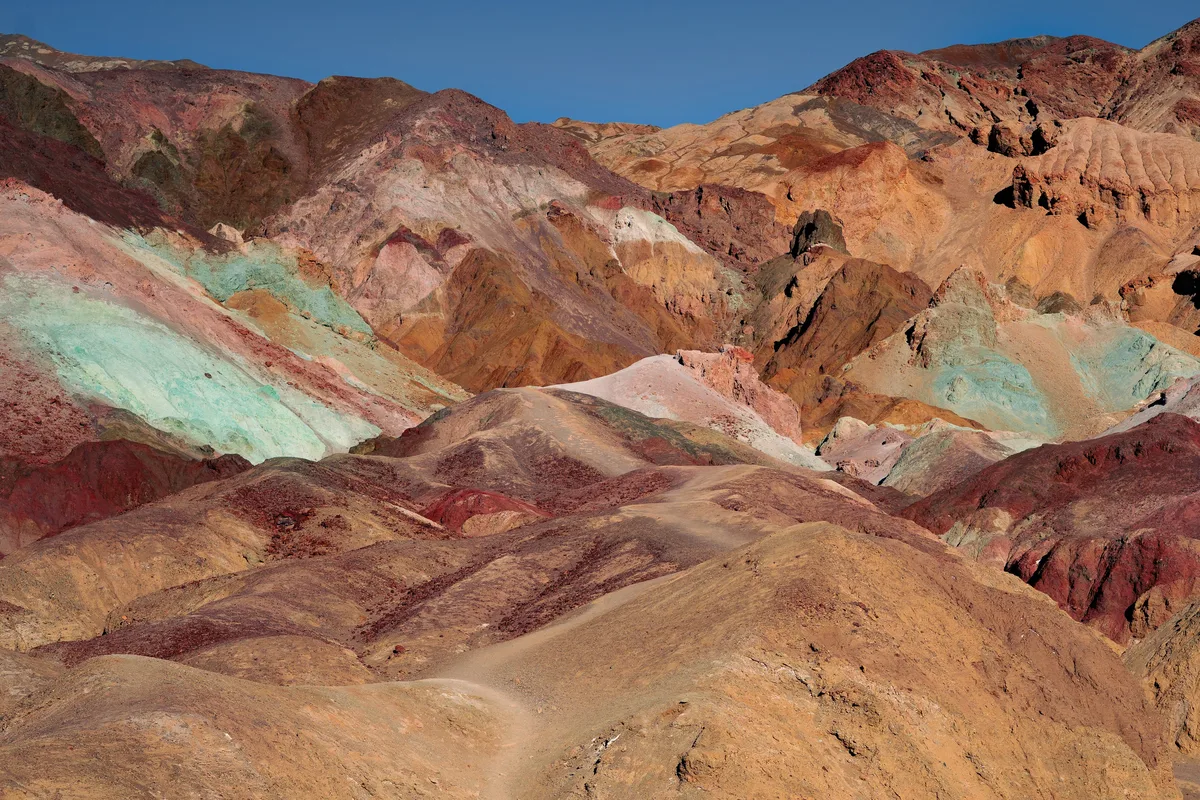
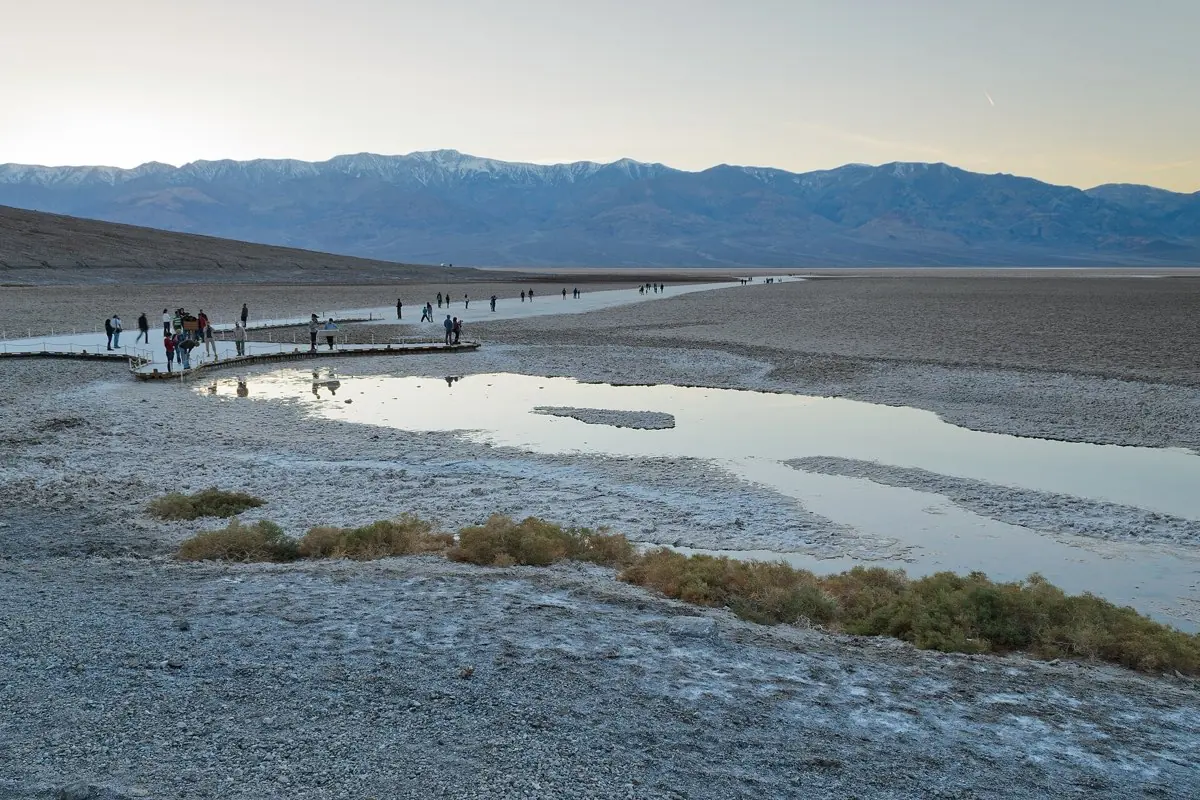
The hottest, driest, and lowest national park in the US, with Zabriskie Point's badlands, the salt flats of Badwater Basin 282 feet below sea level, and Artist's Palette's mineral-streaked hillsides.
Visitor guide
Death Valley National Park straddles the California-Nevada border and covers about 3.4 million acres, making it the largest national park in the contiguous United States. Its basin floor reaches 282 feet below sea level at Badwater, the lowest point in North America, while Telescope Peak in the Panamint Range rises to 11,049 feet within the same park.
The valley is a graben, a block that dropped between faults in the Basin and Range region, and the park's oldest rocks are at least 1.7 billion years old. More than 93 percent of the park is designated wilderness. Summers are famously extreme: Furnace Creek (Greenland Ranch) recorded 134 degrees Fahrenheit on July 10, 1913, which is listed as the highest air temperature ever recorded on Earth, although some researchers have questioned that specific reading. Rain is scarce, at roughly 1.5 inches a year at Badwater, but rare storms can bring wildflower displays to the valley floor, and snow can cap the high peaks in winter.
The valley is the homeland of the Timbisha Shoshone, who today partner with the park in caring for it. The name came in 1849-50, when gold-seekers looking for a shortcut to the California diggings crossed the valley; one account notes that only one person in that group died there. Later mining targeted borax, talc, gypsum, and salt. Borax was discovered near Furnace Creek Ranch in 1881, and the Harmony Borax Works, built by William T. Coleman, processed ore from the early 1880s until it closed in 1888. Its borax was hauled by the famous 20-mule teams on the long route to Mojave, and the site was added to the National Register of Historic Places in 1974.
President Herbert Hoover proclaimed Death Valley a national monument on February 11, 1933, and Congress redesignated it a national park on October 31, 1994, expanding it substantially. Devils Hole, home of the Devils Hole pupfish, was added to the monument in 1952. The park became an International Dark Sky Park in 2013 and is part of the Mojave and Colorado Deserts Biosphere Reserve, recognized by UNESCO in 1984.
NPS highlights include the badlands at Zabriskie Point, the Mesquite Flat Sand Dunes near Stovepipe Wells, the salt flats at Badwater, a natural rock bridge in a canyon, and the mountain views from Dantes View. Racetrack Playa is known for its mysterious sliding rocks. The park lists more than 1,000 plant species, 23 of them found nowhere else, along with bighorn sheep, coyotes, and desert pupfish living in oases. NASA has also used the park's terrain to prepare for exploring other planets.
Conditions in the park change with season and weather, and road access, services, and permits are set by the National Park Service, so check the NPS Death Valley page before you go. Distances are long and services are limited, which is where a private tour helps: a private vehicle and driver, with door-to-door pickup, means your group can focus on the viewpoints rather than the driving.
See every tour and attraction we cover in Las Vegas.