TorontoOntario · 36 tours
 Niagara FallsOntario · 25 tours
 New York CityNew York · 30 tours
 Las VegasNevada · 8 tours
 San FranciscoCalifornia · 16 tours
 VancouverBritish Columbia · 17 tours
 DubaiUAE · 54 tours
 Abu DhabiUAE · 5 tours
 Buenos AiresArgentina · 23 tours
 AthensGreece · 31 tours
 AucklandNew Zealand · 38 tours
 CancunMexico · 54 tours
No destinations match “”. Try searching all tours instead — that search understands full questions, not just place names.
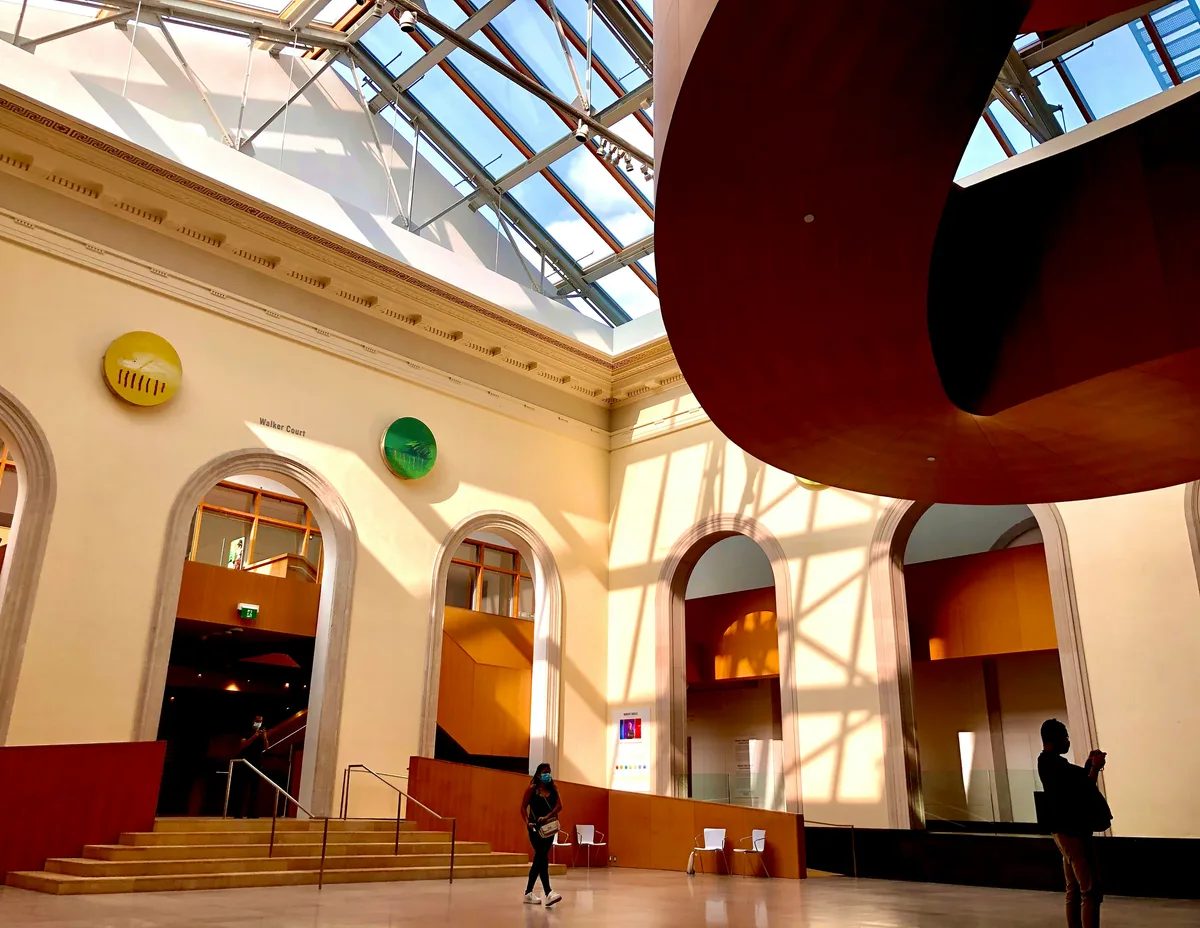
One of the largest art museums in North America, with major holdings of Group of Seven paintings, inside a Frank Gehry-redesigned building in downtown Toronto.
Visitor guide
The Art Gallery of Ontario, or AGO, is Toronto's principal art museum, on Dundas Street West beside Grange Park. It combines a nineteenth-century house, early twentieth-century galleries and Frank Gehry's 2008 transformation of the building, and its collections range from Canadian and Indigenous art to European masters, photography and contemporary work.
The institution was founded in 1900 as the Art Museum of Toronto by private citizens and members of the Toronto Society of Arts, and was incorporated by provincial legislation in 1903. It became the Art Gallery of Toronto in 1919, in part to avoid confusion with the Royal Ontario Museum, and took its present name in 1966 when it became the provincial art museum.
The Grange, a house built in 1817, was bequeathed by Harriet Boulton Smith, who died in 1909; ownership passed in 1911 and the museum opened there in June 1913. The Grange is a National Historic Site of Canada (designated 1970). The first galleries of the main building, designed by Darling and Pearson, opened in 1918, with later additions in the 1920s and 1930s, in the 1970s by John C. Parkin, in 1993 by Barton Myers with KPMB Architects, and in 2004-2008 by Frank Gehry. Sources differ on whether the second phase opened in 1924 or 1926.
Frank Gehry, who grew up in Toronto, led the Transformation AGO project, announced at C$254 million and reported at C$276 million when completed. The building reopened in November 2008 with roughly 20 percent more floor area and about 47 percent more art viewing space. Highlights include a Douglas fir-clad spiral staircase that the AGO says rises from Walker Court through the glass ceiling to the fifth floor of the Vivian & David Campbell Centre for Contemporary Art, and the Galleria Italia, a roughly 200-metre timber-and-glass gallery along Dundas Street, built largely of Douglas fir. Walker Court was reworked with a skylit atrium and new staircases. Critics largely praised the design, though the project was not without debate over cost and donor recognition.
The AGO's collection is large, with Wikipedia citing more than 120,000 works as of 2021, though only a small fraction is on view at once. Canadian art spans the pre-Confederation period to the late twentieth century and includes the Group of Seven, Tom Thomson, David Milne, Cornelius Krieghoff and the Indigenous artists shown in the J.S. McLean Centre for Indigenous and Canadian Art. The gallery is often cited for its Group of Seven holdings, but the claim to the world's largest should be treated as unverified.
The Thomson Collection, given by Kenneth Thomson from 2004, brought in Canadian and European works, including Peter Paul Rubens's Massacre of the Innocents, which Thomson bought in 2002 and later donated. The Henry Moore Sculpture Centre, opened in 1974, holds roughly 300 pieces Moore gave and is described as the largest public collection of his work. The Inuit holdings include a visible storage gallery that opened in 2013, and the photography collection includes works by Diane Arbus. Yayoi Kusama's Infinity Mirror Room has been a permanent installation since 2019 (confirm availability before visiting).
The AGO sits at the edge of Chinatown and Kensington Market, beside Grange Park, and a short drive from the Eaton Centre and the Entertainment District. OCAD University's Sharp Centre for Design is directly across McCaul Street.
See every tour and attraction we cover in Toronto.