TorontoOntario · 36 tours
 Niagara FallsOntario · 25 tours
 New York CityNew York · 30 tours
 Las VegasNevada · 8 tours
 San FranciscoCalifornia · 16 tours
 VancouverBritish Columbia · 17 tours
 DubaiUAE · 54 tours
 Abu DhabiUAE · 5 tours
 Buenos AiresArgentina · 23 tours
 AthensGreece · 31 tours
 AucklandNew Zealand · 38 tours
 CancunMexico · 54 tours
No destinations match “”. Try searching all tours instead — that search understands full questions, not just place names.
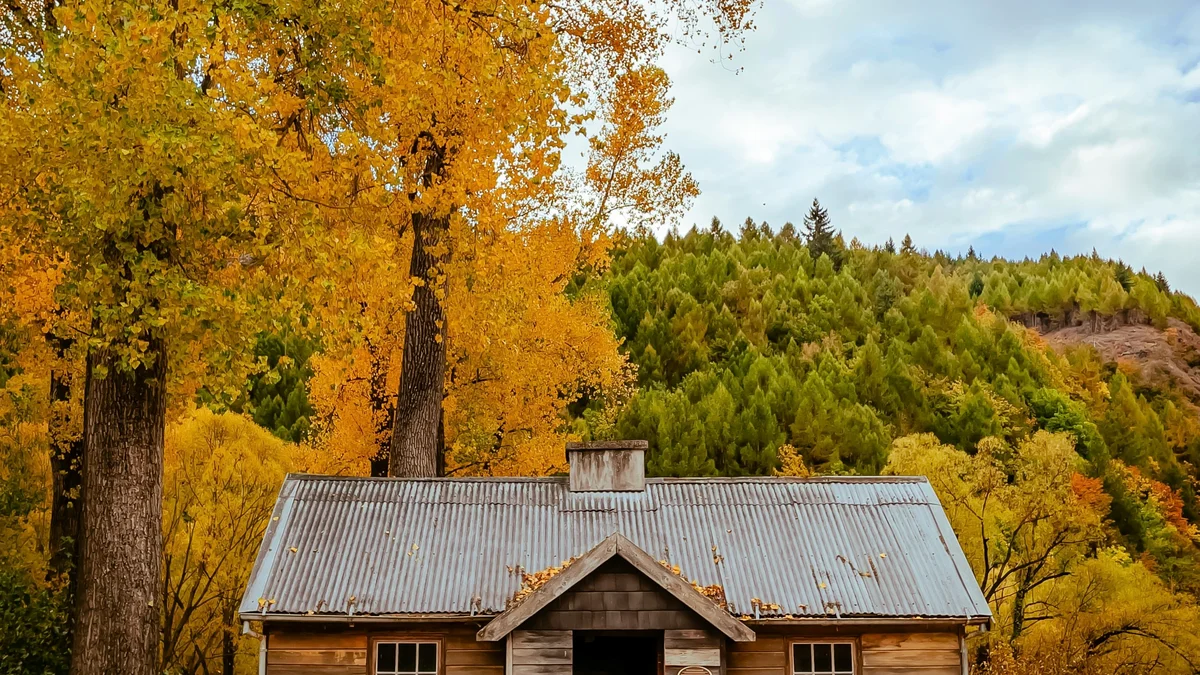
Gold was discovered here in 1862, and Arrowtown grew almost overnight into a mining boomtown before settling into the quiet heritage village it is today. Its main street is lined with preserved 19th-century miners' cottages and shopfronts, and the nearby Chinese Settlement preserves the huts of the Chinese miners who worked the goldfields. The deciduous trees planted by early settlers turn the town brilliant gold and red every autumn.
Visitor guide
Arrowtown is a historic gold-mining town in Otago on New Zealand's South Island, on the Arrow River about 19.5 km east of Queenstown. Its Maori name is Ka-muriwai. Preserved colonial buildings, a restored Chinese settlement and strong autumn colour make it one of the best-known heritage towns in the region.
According to Wikipedia, Jack Tewa, known as Maori Jack, found gold in the Arrow River in August 1862, and a gold rush township quickly developed; the town's own history page says more than 1,500 miners were camped on the Arrow River by the end of 1862, though Wikipedia's figure differs. It was first called Fox's, after William Fox's claim to have been first to find gold there, but was soon renamed Arrowtown; the article notes that the Fox claim lacks a citation. With only about a dozen police for thousands of miners, lawlessness was a problem until a police camp and warden's office were set up. The first buildings were temporary structures of calico, later replaced by more permanent ones, and hotels including Fox's Golden Age hotel were built in 1863. At the height of the gold rush the population exceeded 7,000, and the borough also covered Macetown, Skippers Canyon and Bullendale, now ghost towns.
Chinese settlers arrived in the 1870s and were required to live in huts on the banks of Bush Creek. The Arrowtown Chinese Settlement now includes Ah Lum's store and several restored miners' houses that visitors can tour. It is one of the most distinctive reminders of the Chinese miners who worked the Otago goldfields.
Arrowtown was constituted a borough in 1867, and a fire in 1896 destroyed a bakery, a hotel and part of a store. Today, seven cottages on Buckingham Street built in the 1870s remain largely unaltered and are listed with Heritage New Zealand. St John's Presbyterian Church of 1873 is built of schist in the Gothic Revival style and was the first stone building in the town, St Paul's Anglican Church of 1871 is the oldest church, and the Masonic Lodge of 1888 is a Category One historic place. Strict appearance covenants apply to new construction to preserve the town's character.
The Lakes District Museum occupies a group of historic buildings and covers local gold mining and early settlers. Buckingham Street, the main street, sits at about 410 metres above sea level, and the area has four distinct seasons, with autumn colours a major draw. The Arrowtown Autumn Festival is held each April and includes a parade, gold panning championships and market stalls, and Matariki Arrowtown Lights is a one-day event with projections on Buckingham Street. In 2020 Arrowtown was named the most beautiful small town in New Zealand by the Keep New Zealand Beautiful awards.
The town is small, with an estimated population of 2,860 in June 2025, and is easy to explore on foot. A private tour can fit it into a day alongside the Queenstown area, with the driver handling the short road from Queenstown.
See every tour and attraction we cover in Queenstown.